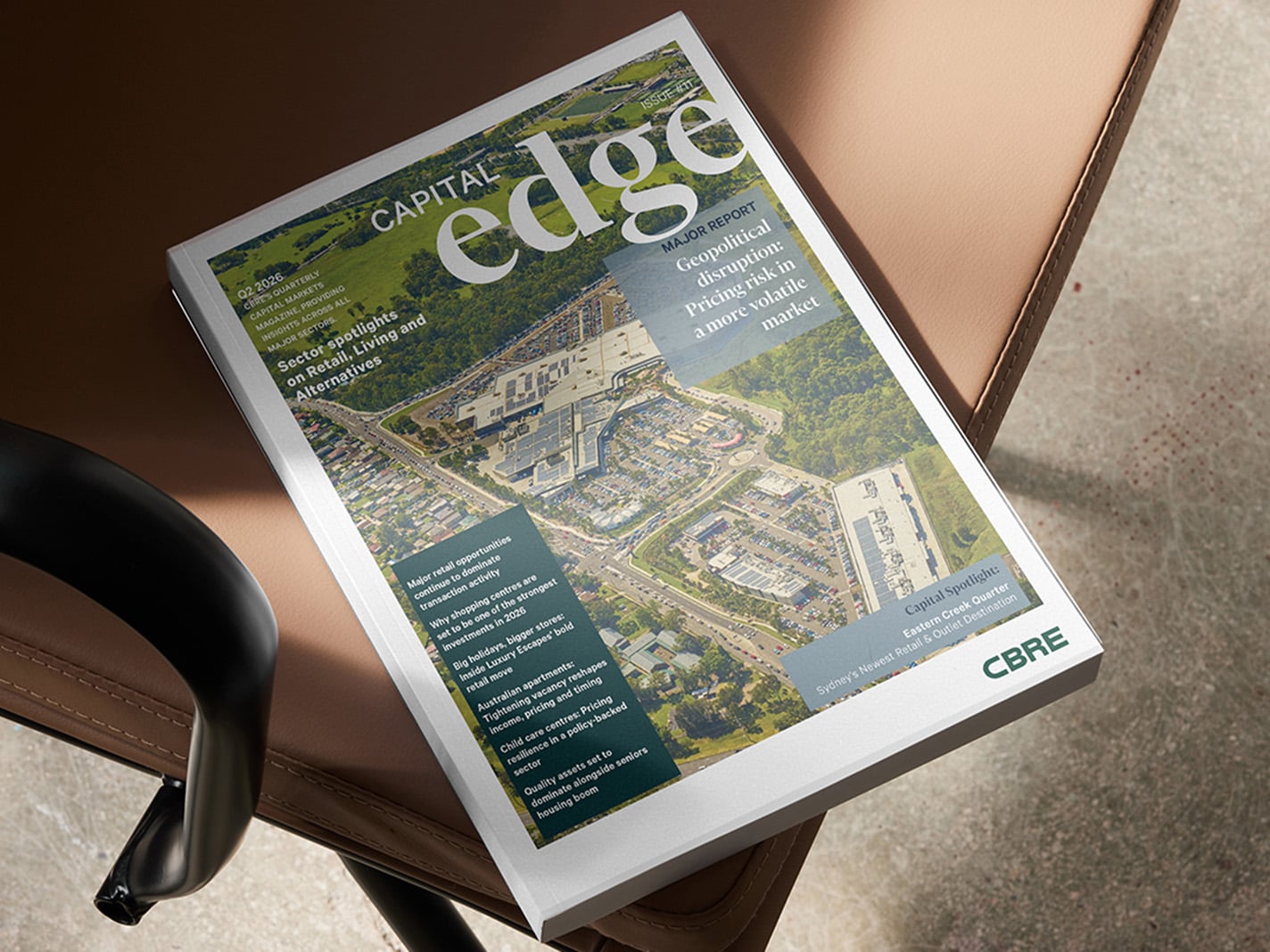
Capital Edge
Business Insights | 5 Questions for Sam Saghir-Pashley
An insight-led conversation with Sam Saghir-Pashley on navigating global capital markets, building a career across continents, and why data centres and industrial assets are attracting unprecedented investor demand.
July 22, 2026

What professional achievement are you most proud of, and why does it stand out?
It's less a single deal than a series of high-profile transactions I've been fortunate to work on. Early in my career I worked on Blackstone's £4.7bn acquisition of the IQ student portfolio, primarily in the engine room on due diligence and market intelligence, but close enough to see how a transaction of that scale comes together.What I’ve valued most since is the diversity of asset classes I’ve been exposed to, from traditional sectors like office, retail and industrial through to niche mandates such as youth hostels and theme parks, including the sale of Luna Park.
The more unique assets are often the most interesting because there is no playbook and few, if any, comparable transactions. You are forced back to first principles, working out how to value, structure and position the opportunity to capital providers. That process is what I find most rewarding, and the breadth of those experiences is what I would consider my most meaningful professional achievement.
What has been your most significant professional challenge, and how has it shaped how you lead or make decisions today?
Relocating twice, from London to Singapore and then Singapore to Sydney, and rebuilding my career each time. Real estate, and capital markets in particular, run on relationships and local market knowledge, both of which reset when you move.That experience reinforced the importance of networking, building connections internally and externally to accelerate learning. It also taught me to be comfortable not having all the answers immediately and to actively seek input when needed.
It has made me more collaborative and a more measured decision maker. I place a strong emphasis on leveraging CBRE’s internal network to sense check research and assumptions before presenting them to clients.
Why CBRE? What sets it apart for you, both personally and professionally?
What sets CBRE apart is its culture of connectivity. The platform spans geographies, sectors and service lines, providing not just access to information but, more importantly, access to people. When I encounter a knowledge gap, there is almost always someone within the business who has already solved a similar problem.This connectivity is critical in capital markets, where capital is global and increasingly interconnected. The right capital partner may sit in another region, relevant pricing insight may come from a recent transaction in a different market, and key intelligence often exists across borders and teams. The platform enables me to bring those inputs together to deliver a more informed outcome for clients.
On a personal level, that same environment encourages continuous development. Being surrounded by knowledgeable and collaborative people, combined with the firm’s support for mobility and progression, has made CBRE a place where I can continue to grow.
Why Data Centres and Industrial?
Because this is where strong structural tailwinds and capital demand are converging. Industrial and Logistics has been re rated through the growth of e commerce and evolving supply chains, shifting from a niche allocation to a core institutional sector.Data centres represent the next phase, with digitisation and AI driving demand for physical infrastructure at scale. The capital required is significant, and the assets themselves are operationally complex, making them particularly compelling from a capital markets perspective. This combination of scale, complexity and institutional interest makes both sectors highly attractive areas to focus on.
Looking back, what is the most valuable advice you'd give someone starting in the industry today?
Build a strong technical foundation and remain adaptable in how you apply it. It can be tempting to focus early on relationship building, but there is equal value in being the person who can deliver reliable analysis and adapt to different transaction requirements, whether across asset classes, structures or unfamiliar challenges. That depth and flexibility are what underpin long term success.Be curious about capital, not just assets. Understanding how different pools of capital think about risk, structure and returns is what differentiates you.
Finally, be open to movement, both geographically and across sectors. Some of the most valuable learning comes from being challenged, and that discomfort is often where the most meaningful growth occurs.
Get in Touch
Sam Saghir-Pashley
Associate Director, Capital Markets, Infrastructure, Industrial & Logistics

Read the Latest From Capital Edge
In each issue we bring you critical insights, data points, trends, and transactions to help you stay ahead of the curve in the evolving world of Capital Markets.